 LENNIE
Sing it.
Don't click it.
Most ear training apps teach you to recognize intervals. But recognition and production are different skills. To truly create music, you have to produce the sounds.
Lennie trains both. On demand. In any key. Against a chord, by itself, or a cappella.
The way you actually need it when you're practicing or performing.
 Soon
Soon Soon
SoonNo subscription. Ever.
You've tapped "Major Third" a thousand times. So why can't you sing one?
You hear the line you want to play. It's right there in your head.
But your fingers freeze. You hunt for the notes. The moment passes.
Recognition apps taught you to identify intervals. They never taught you to produce them. One is trivia. The other is musicianship.
"You cannot play in tune if you can't sing in tune. One must really hear and feel the music to further extend it to an instrument. — Lennie Tristano
Lennie makes you sing.
Production first
Hear the notes. Sing them back. No buttons. No guessing. Just you and the sound.
Harmonic context
You never play a major third in isolation. You play it against a chord, in a key, in a tune. Lennie trains you the same way.
No gamification
No badges. No streaks. No points. Skill is the reward.
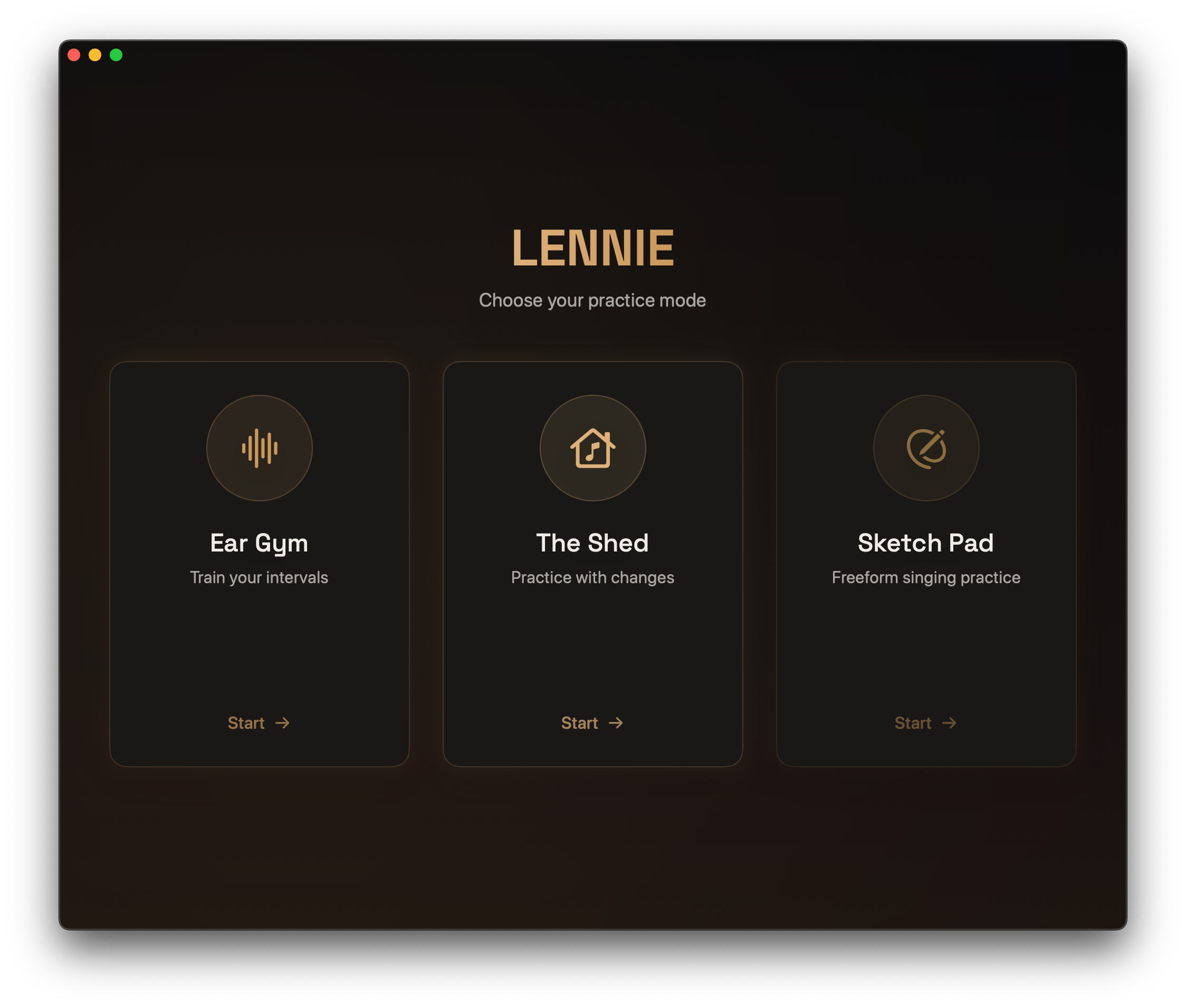
Three ways to practice
Ear Gym
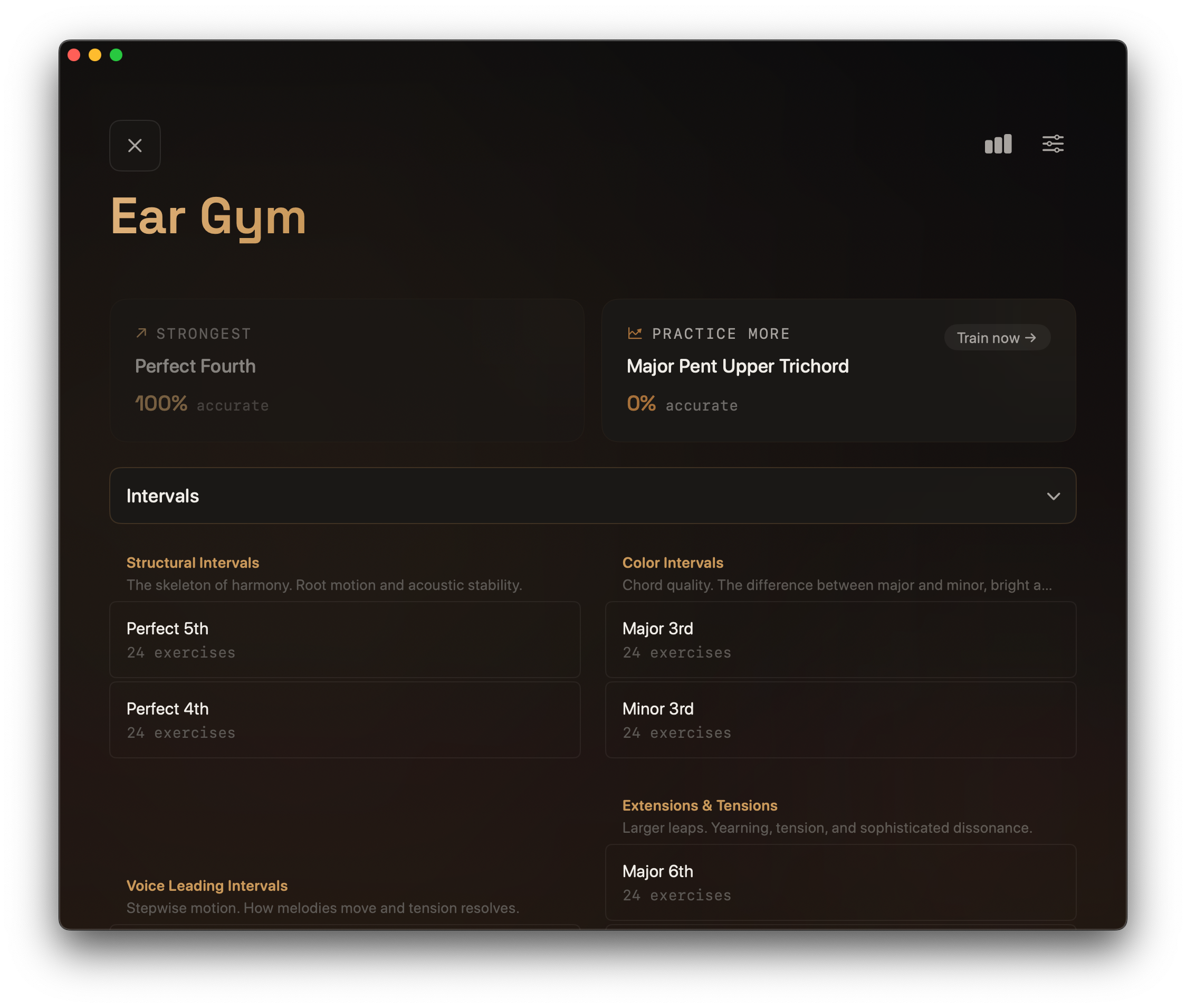
100+ modules. 10,000+ exercises and growing. Intervals, triads, seventh chords, triad pairs, pentatonics, chord tones. Every exercise in all 12 keys with harmonic context. No unlocking. Practice what you need, when you need it.
The Shed
Practice over chord changes. Apply what you've drilled in the gym to actual music.
Sketch Pad
Your intonation mirror. Sing freely, then see exactly what you sang — notes on a staff with cent deviations. Diagnostic, not training.
What you get
- 1
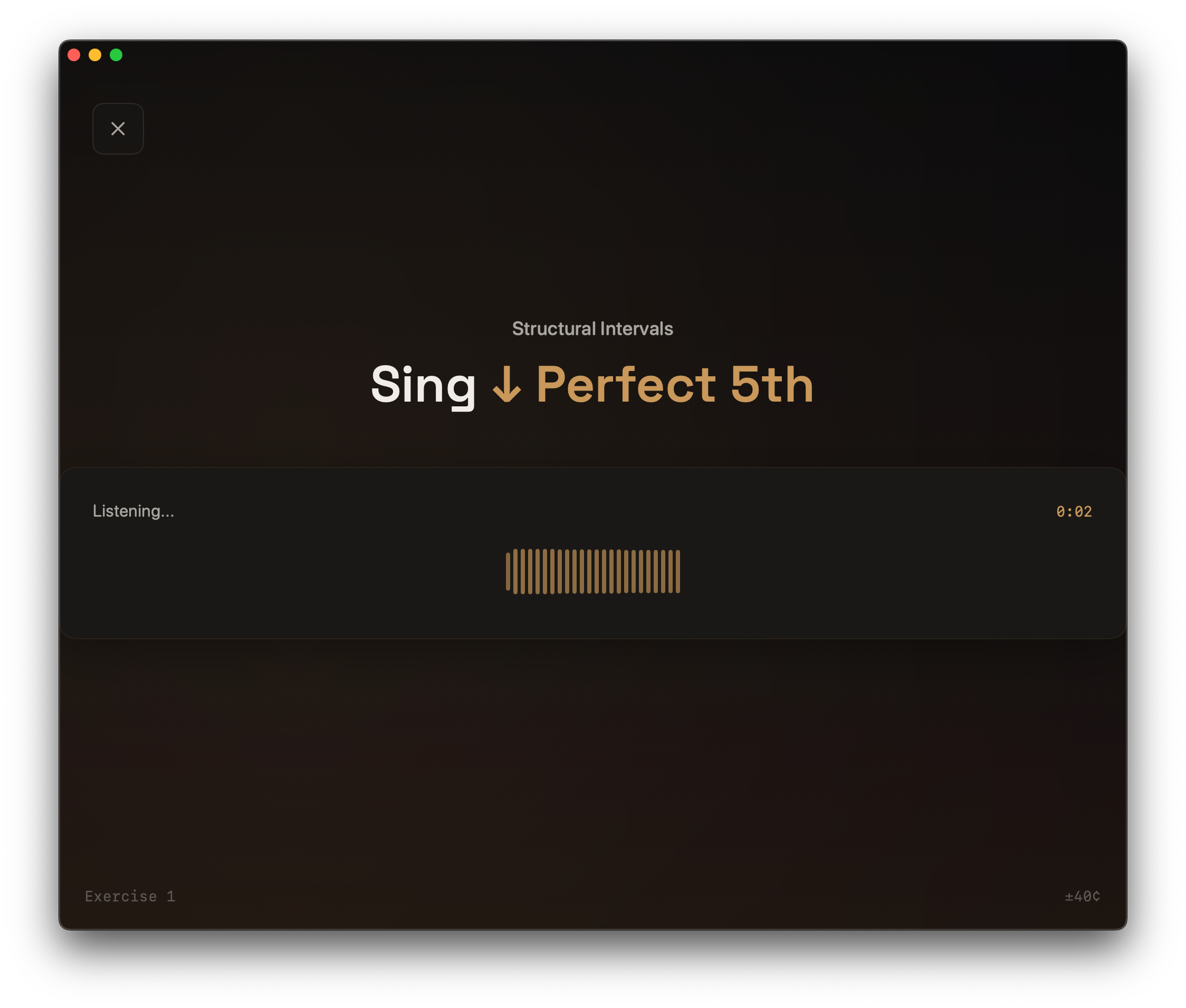
Hear the sound, then reproduce it
You hear the notes together as a chord. Then each note individually. Then together again. Internalize the sound, then sing it back.
- 2
From recognition to production
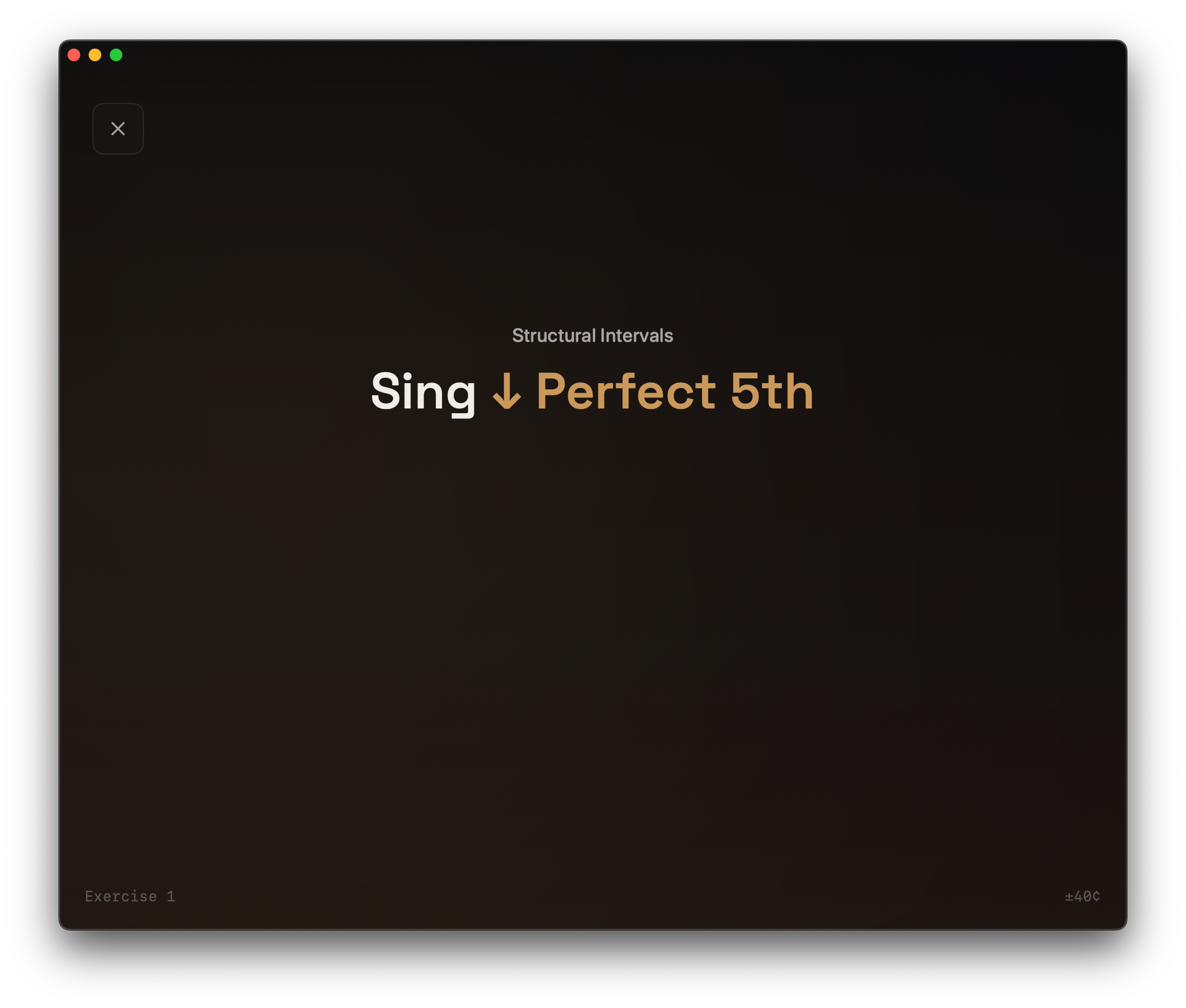
No buttons. No multiple choice. You sing it back with your voice. This is the skill that transfers to your instrument: producing pitch on demand.
- 3
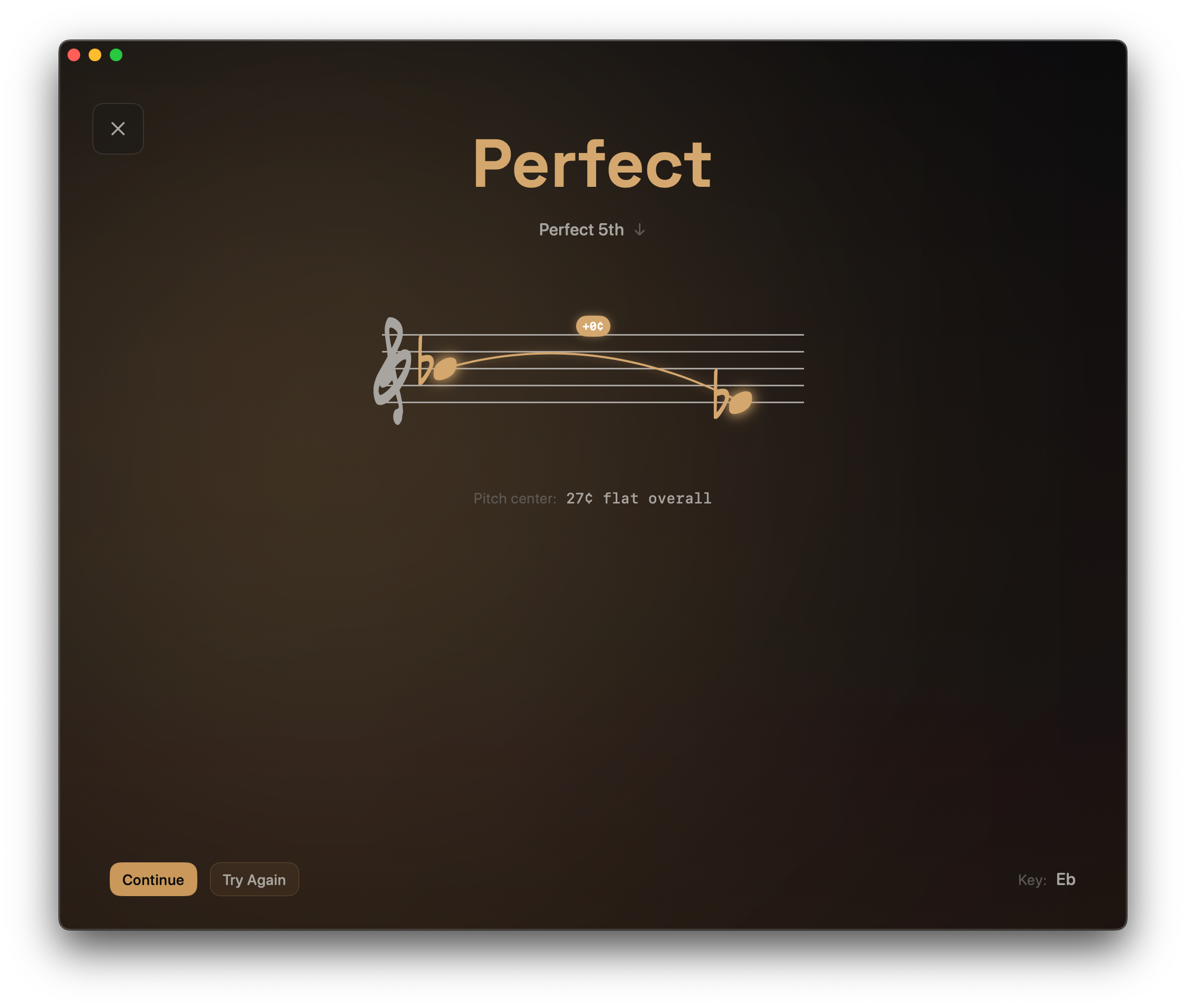
Feedback that actually matters
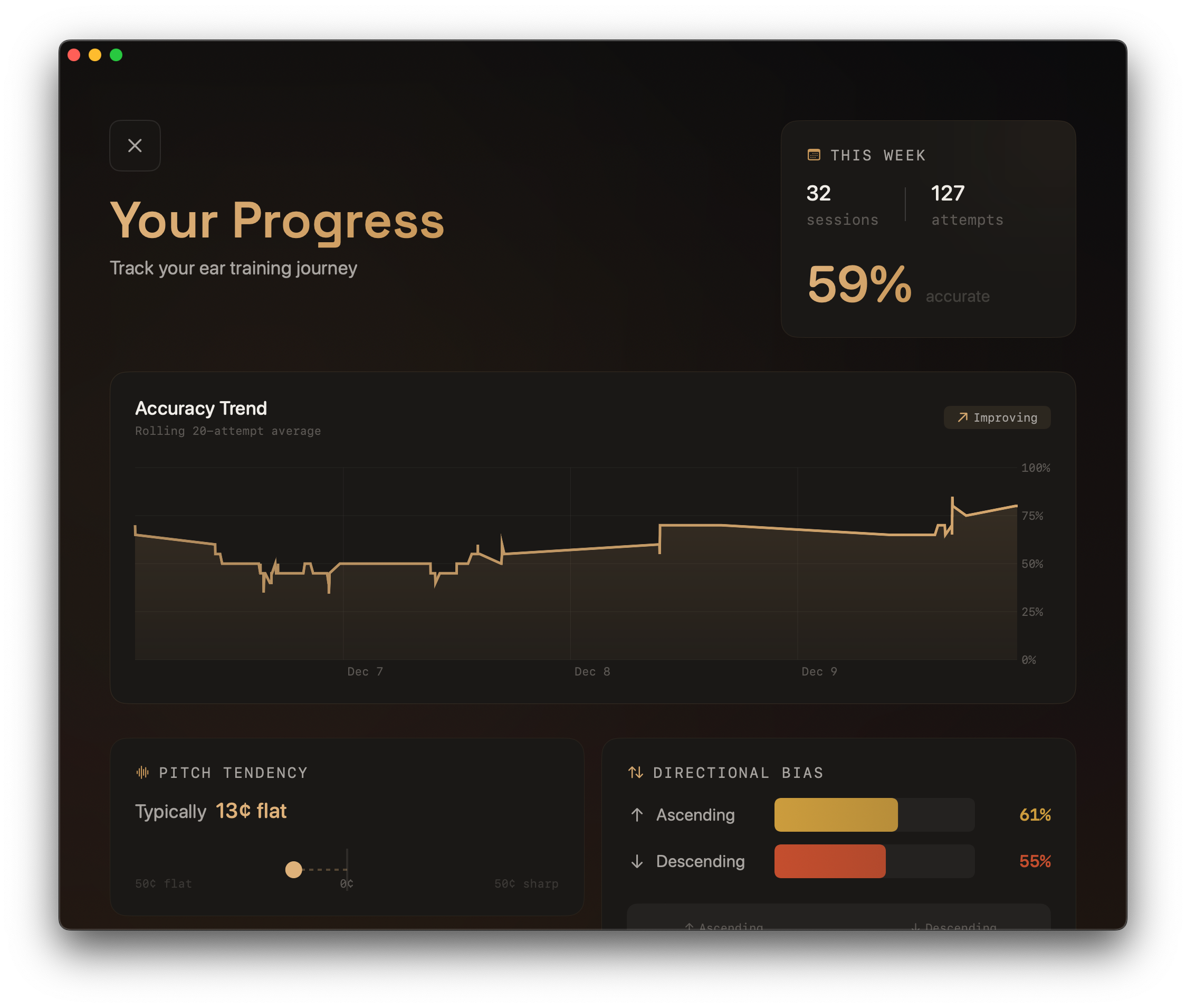
Lennie grades the relationship between your notes. No judgment if you don't have perfect pitch. Sang the major third 10 cents sharp? Pass. The interval is correct. Drifting flat overall? Lennie will tell you, but it won't fail you. Relative pitch is what counts.
- 4
Your pace, not ours
No levels. No unlocking. No "you're not ready for tritones yet." Start with a perfect fifth if you're new. Jump to triad pairs if you're ready. Track your accuracy over time. The numbers are the reward.
For serious musicians
This is for you if...
- You can identify intervals on a quiz but freeze when trying to sing them
- You hear the melody in your head but can't get it out through your instrument
- You want to connect more deeply with music. To hear it, feel it, and produce it on demand.
- You want to be a more informed listener. To understand what you're hearing, not just feel it.
- You care about privacy. Your audio never leaves your device. No cloud. No uploads. Just you and your practice.
This isn't for you if...
- You want to "gamify" your practice with streaks and badges
- You need the app to motivate you. We won't. You either want this or you don't.
- You're looking for shortcuts. There are none. Just you, the sound, and repetition. For the rest of your life.
- You expect results without discomfort. Singing out loud is uncomfortable at first. That's the point.