 LENNIE
Sing it.
Don't click it.
Most ear training app teach you to recognize intervals. Recognition & production are two different things. One must produce to truely create music.
Lennie teaches you to recognize & produce them.
On demand. In any key. Against a chord, by itself or acapella. Like you actually need when you're playing music.
You've tapped "Major Third" a thousand times. So why can't you sing one?
You sit down at the piano. A tune is playing. You hear the line you want to play. It's right there in your head.
But your fingers freeze. You hunt for the notes. The moment is gone.
Recognition apps taught you to identify intervals when you hear them. They didn't teach you to produce them when you need them. Those are different skills. One is trivia. The other is musicianship.
Lennie makes you sing.
Production first
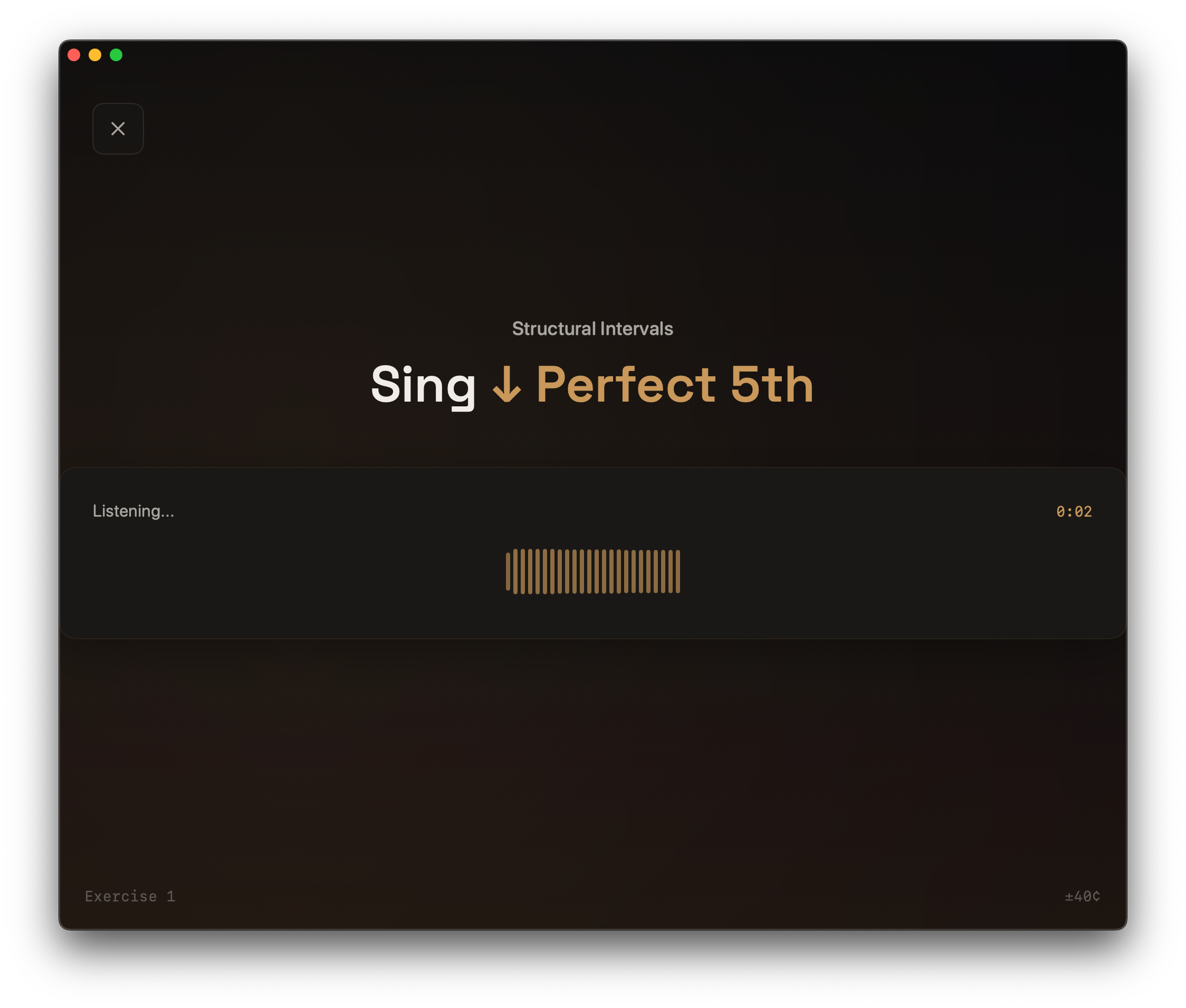
You hear a reference note. You sing the interval. No buttons. No guessing. Just you and the sound.
Harmonic context
You never play a major third in isolation. You play it against a chord, in a key, in a tune. Lennie plays a I chord before every exercise. You hear where you are harmonically before you sing. That's the insight every other app misses.
No gamification
No badges. No streaks. No points. Skill is the reward.
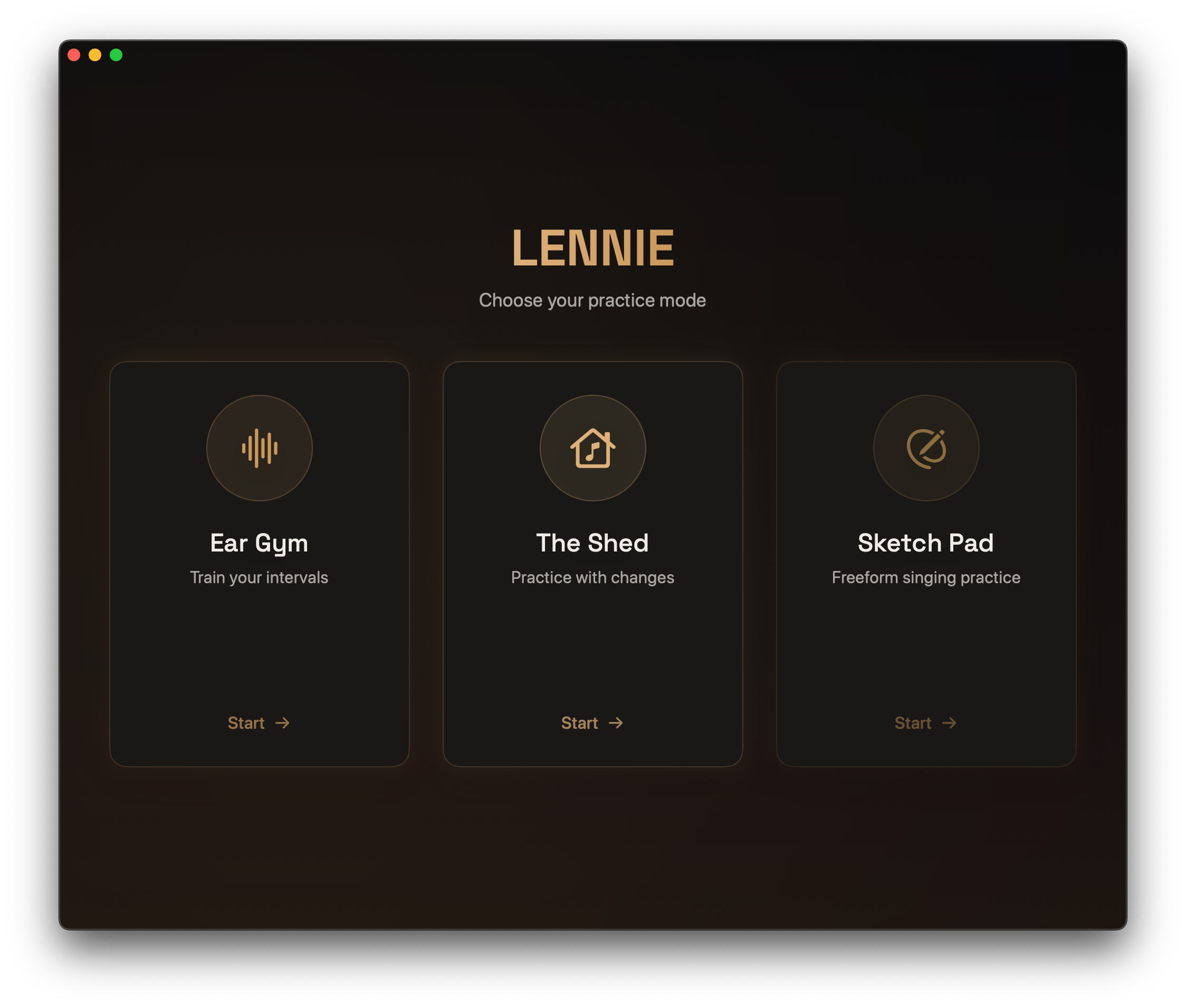
Three ways to practice
Ear Gym
Interval training. You hear the notes, then you sing them back. Build the fundamental sounds until they're automatic.
The Shed
Practice over chord changes. Real tunes, real progressions. Apply what you've drilled in the gym to actual music.
Sketch Pad
Freeform singing practice. No prompts, no grading. Just you, a key center, and space to explore.
What you get
- 1
Your ear starts working harmonically
The I chord plays. Then a reference note. You already know where you are in the key before you sing a single note. This is how professionals hear music. You'll build that skill from day one.
- 2
You produce on demand, not recognize on a quiz
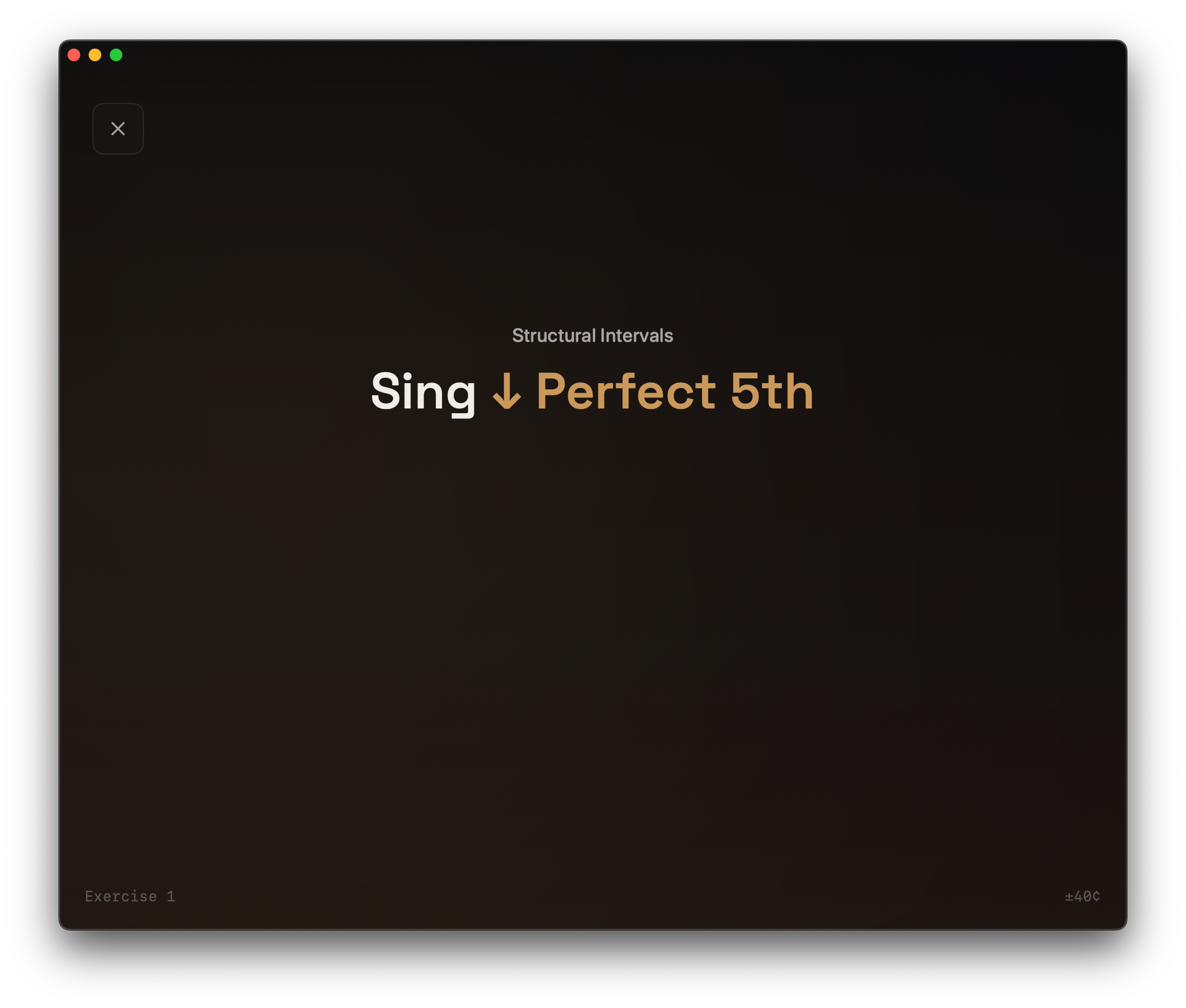
"Sing descending perfect fifth." No buttons. No multiple choice. You hear it in your head, then you sing it. This is the skill that transfers to your instrument. The rest is just trivia.
- 3
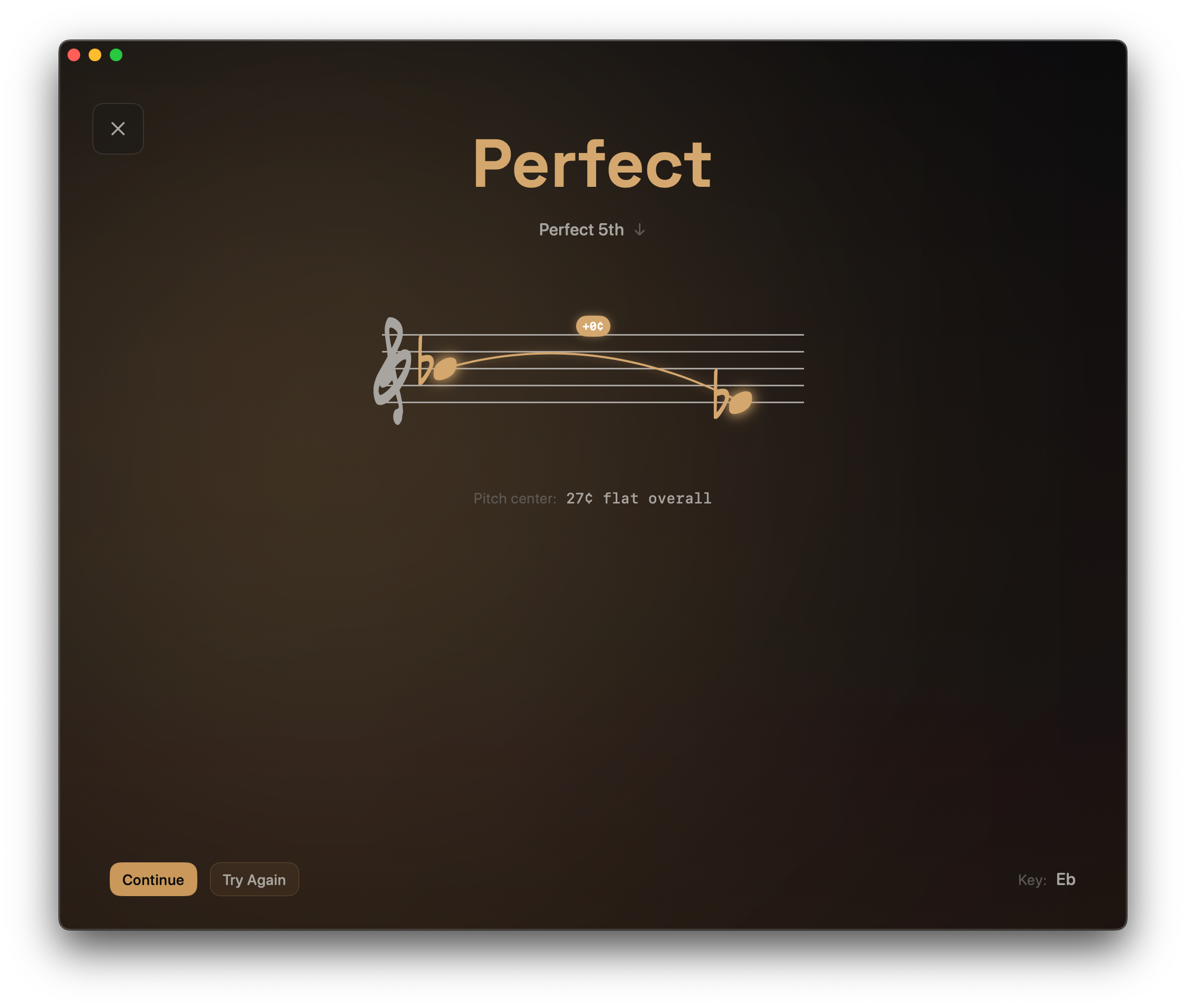
Feedback that actually matters
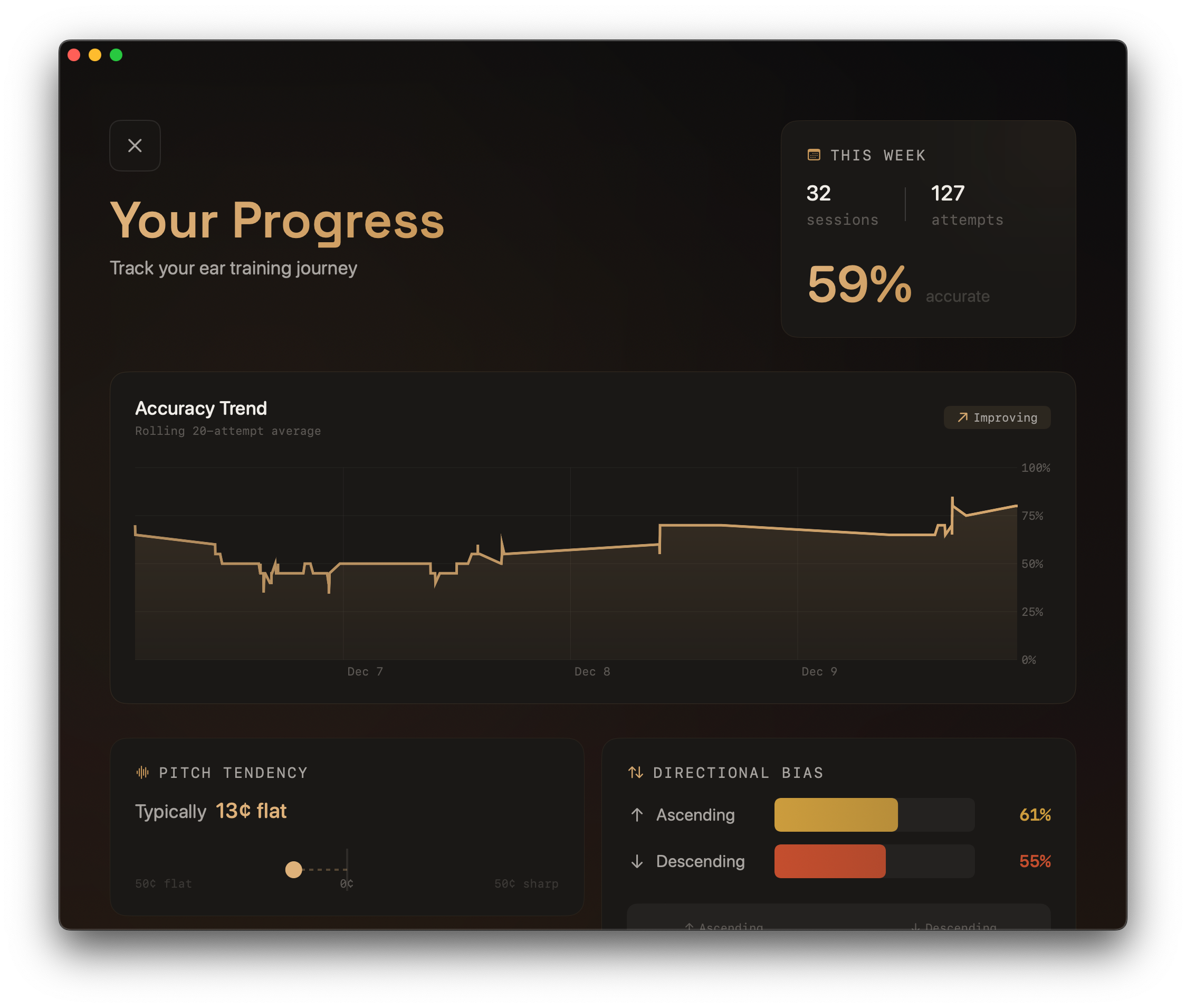
We grade the relationship between your notes, not whether you hit concert pitch. Singing a major third 10 cents sharp? That's a pass. The interval span is correct. Drifting flat overall? We'll tell you, but it won't fail the exercise. Because in real playing, relative pitch is what counts.
- 4
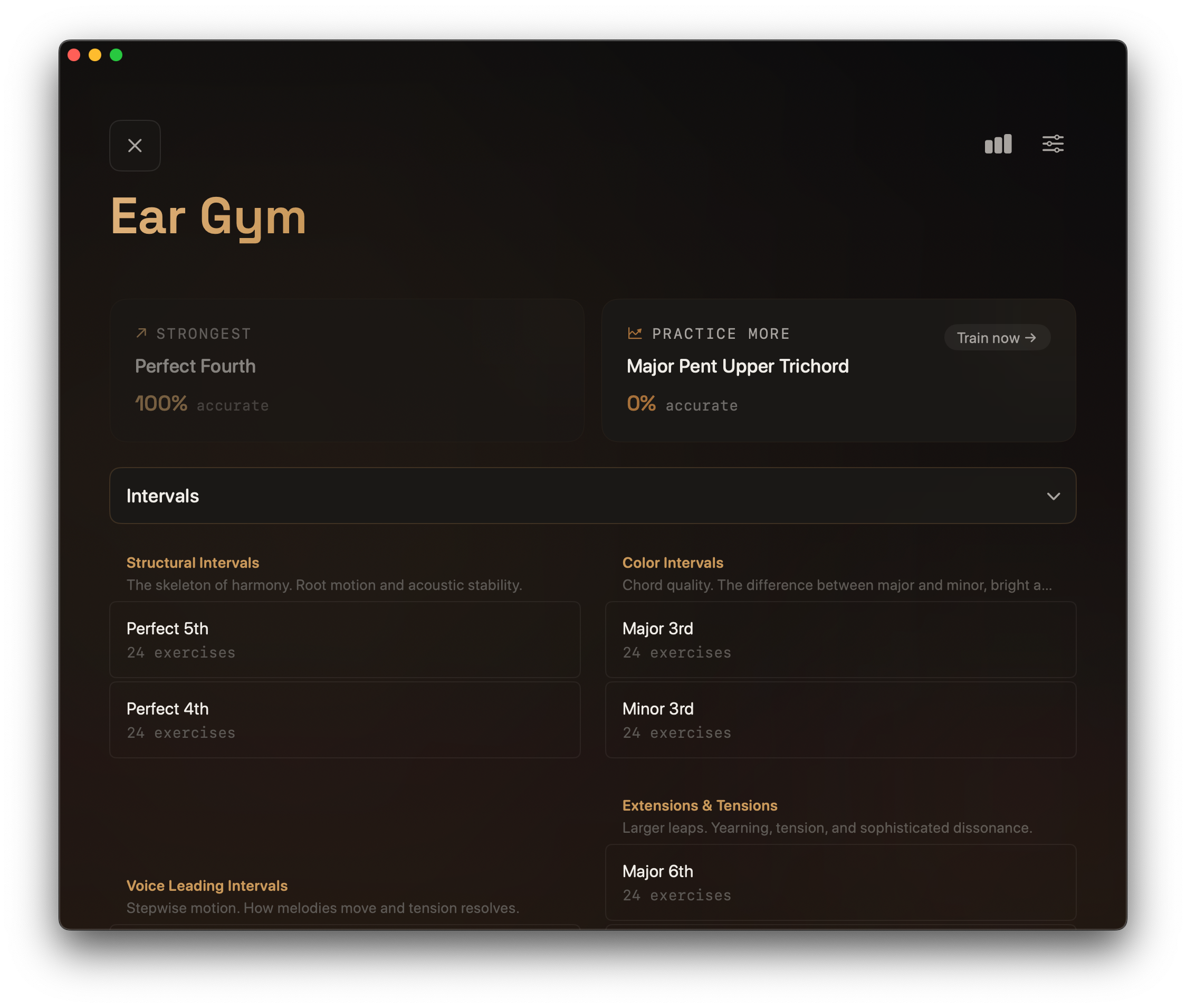
A library of sounds you own
No levels. No unlocking. No "you're not ready for tritones yet." You practice the sounds you need, when you need them. Track your accuracy over time. Watch the numbers improve. That's the reward.
For serious musicians
This is for you if...
- You're transcribing a solo and your ear keeps losing the line halfway through the phrase
- You can identify a tritone on a quiz but freeze when trying to sing one in a tune
- You know the melody you want to play is "right there" but your fingers can't find it fast enough
- You've done the recognition drills and they didn't transfer to your instrument
- You want to hear like a jazz musician hears — harmonically, functionally, relationally
This isn't for you if...
- You want to "gamify" your practice with streaks and badges
- You need the app to motivate you — we won't. You either want this or you don't.
- You're looking for shortcuts. There are none. Just you, the sound, and repetition.
- You expect results without discomfort. Singing out loud is uncomfortable at first. That's the point.